Deanery & Diocese News

St John Kemble Deanery - News

Archdiocese - News

Information and updates concerning Deanery activity

By Webmaster May 16, 2026
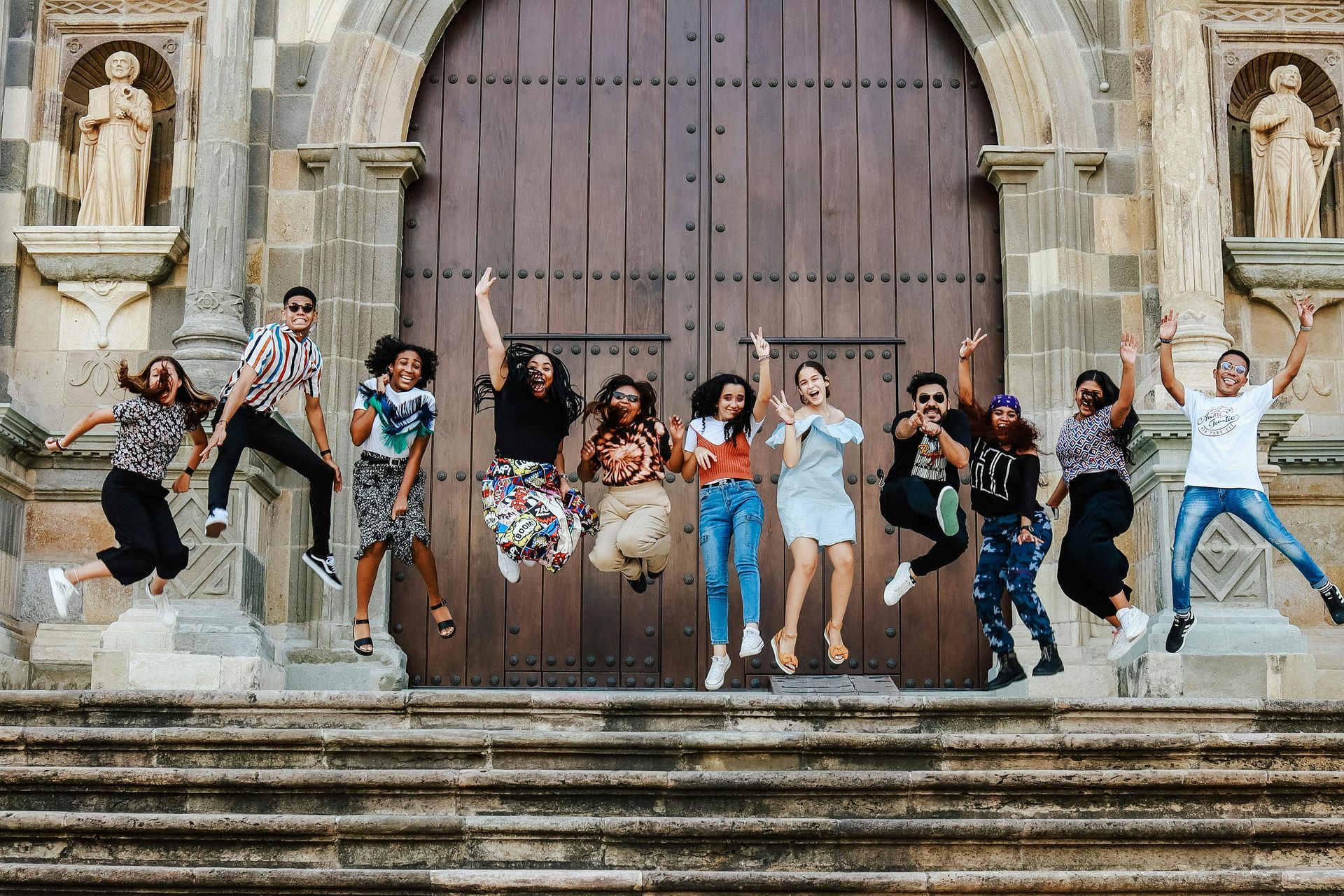
SUMMER CAMP: 5 th - 9th August 2026. For pupils in Year 9 to Year 13. Taking place in St David's Bunk Barns, Pembrokeshire. £300, Travel & Meals included to journey with us, scan QR or email youth@cardiffmenevia.org. Deadline for registration & payment is 8th June.
By Webmaster May 11, 2026
MAY PILGRIMAGE TO OUR LADY OF THE TAPER, CARDIGAN: Saturday, 30th May 11am-5pm. £15 For pupils in Year 8 to Year 13. Rosary Walk. Learn about the Shrine. Connect with others. To journey with us, scan QR or email youth@cardiffmenevia.org. Deadline for registration is 17th May (there will be transport available from select locations).
By Webmaster May 11, 2026
EMMAUS DISCOVER YOUTH MISSION ARCHDIOCESE OF CARDIFF MENEVIA Why Emmaus? In Luke 24 we see two disciples walking the road to Emmaus, heavy with confusion, dejection and sorrow after Jesus’ crucifixion. They don’t realise it at first, but the risen Christ has walked with them – listening to their concerns, questions, explaining Scripture, and ultimately revealing Himself in the breaking of bread. This unexpected, personal and deeply transformative moment the disciples experienced on the road to Emmaus captures what we desire for every young person: that they know Jesus as the one who walks with them on their life’s journey View more Here
PARISH HISTORY

  • Belmont Parish - Beginnings

    For the first fifty years of its life the church at Belmont was a cathedral and the senior resident monks were monastic canons and professors in the House of Studies. In 1917, the General Chapter of the Congregation declared Belmont to be an independent priory and on March 21, 1920, the Holy See raised it to the rank of an Abbey by the Papal Bull ‘Praeclara Gesta’.


     Dom Aelred Kindersley, a monk of Downside Abbey had been appointed as the lastCathedral Prior in 1915 and it was he whom the young Community elected as their first Abbot in 1920. Abbot Kindersley led the new Community for fourteen more years until his death in 1934 and saw the number of brethren and the variety and scope of work greatly increase including the running of a school which sadly closed in 1994. 


    Today the community, living under the fatherly direction of the Abbot, undertakes numerous works including the pastoral care of the local Herefordshire Catholics, parishes further afield in Wales, Cumbria and Peru and various chaplaincies. A foundation, the Monastery of the Incarnation, was made in Peru in 1981. 


    The Belmont Community numbers about 40 monks, about eighteen monks living at Belmont and others living and working outside Belmont on other parish ormissionary commitments.

  • About St Benedict

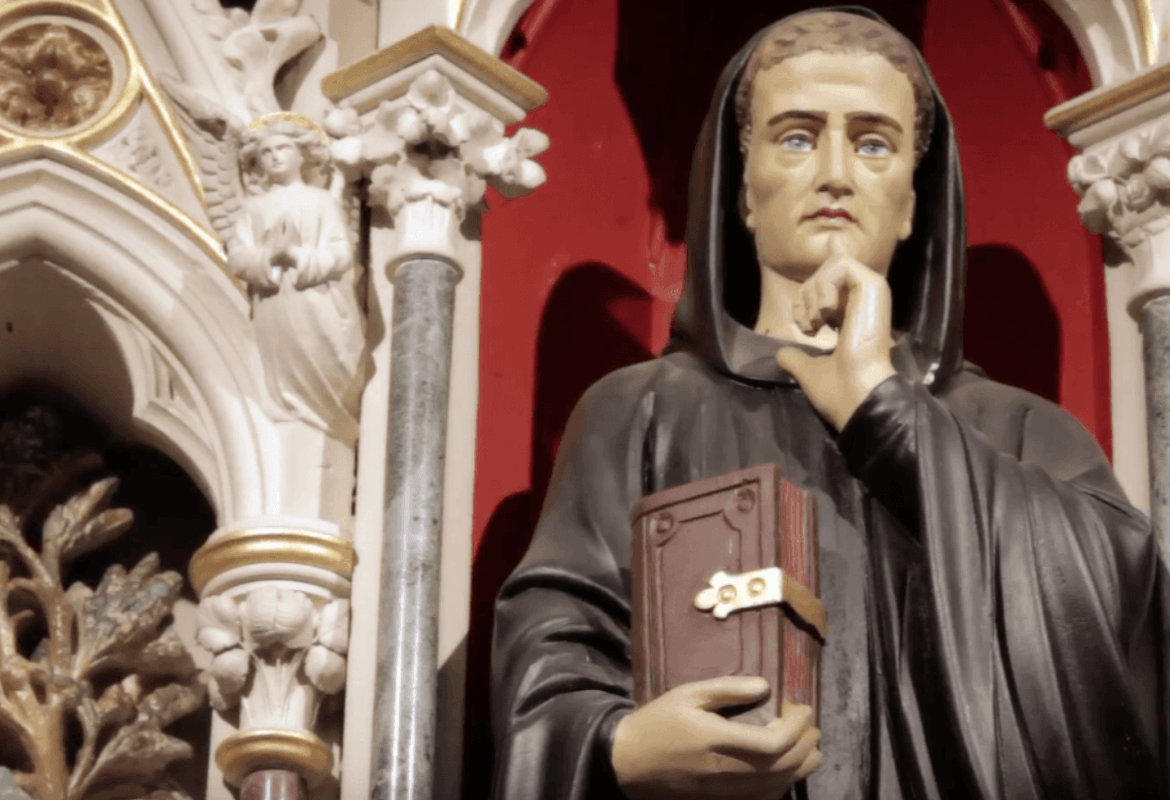
    St Benedict was born in Nursia in Italy about the year 480 AD. The youthful Benedict felt a call to the monastic life while he was studying in Rome. He went into the rocky wilderness of Subiaco and lived as a hermit in a cave on the heights there. His evident holiness attracted disciples and he soon found himself Father or Abbot of a monastic settlement; he was moving from the hermit life toward the cenobitical or community monastic life.


    About the year 520AD Benedict founded the mountain monastery of Monte Cassino and here he wrote the Rule for monks based on the Gospels and the experience of his monastic predecessors. This short book of 73 brief chapters is one of the world's spiritual masterpieces.


    So wise and balanced was the Rule that it quickly supplanted all others and became the basic text for all the monks of the West.


    In this way St Benedict came to be considered the founder of the Black Monks of the Middle Ages, called from that time ‘Benedictines'. 


    Discipline and order, obedience and humility, a

    regular round of daily worship and personal prayers, work and study, love of the brethren, stability in a fixed monastic community, living under a Rule and an Abbot, is the way of life shown in the Rule. It is founded on the underlying Gospel truths and is characterized by a deep personal devotion to Christ. In the mind of St Benedict a monk is a man who comes to the monastery to ‘Seek God'. Suited to every age, it is today as fresh and vigorous as ever, for its wisdom, drawn from the Gospel, is timeless. It is constantly being adapted to modern life and still leads men and women to Christian perfection. The feast of St Benedict, patron of Europe, is kept with solemnity on 21st March and as a feast of the Universal Church on 11th July.

  • Church Design and Dedication


    Building Design and Dedication

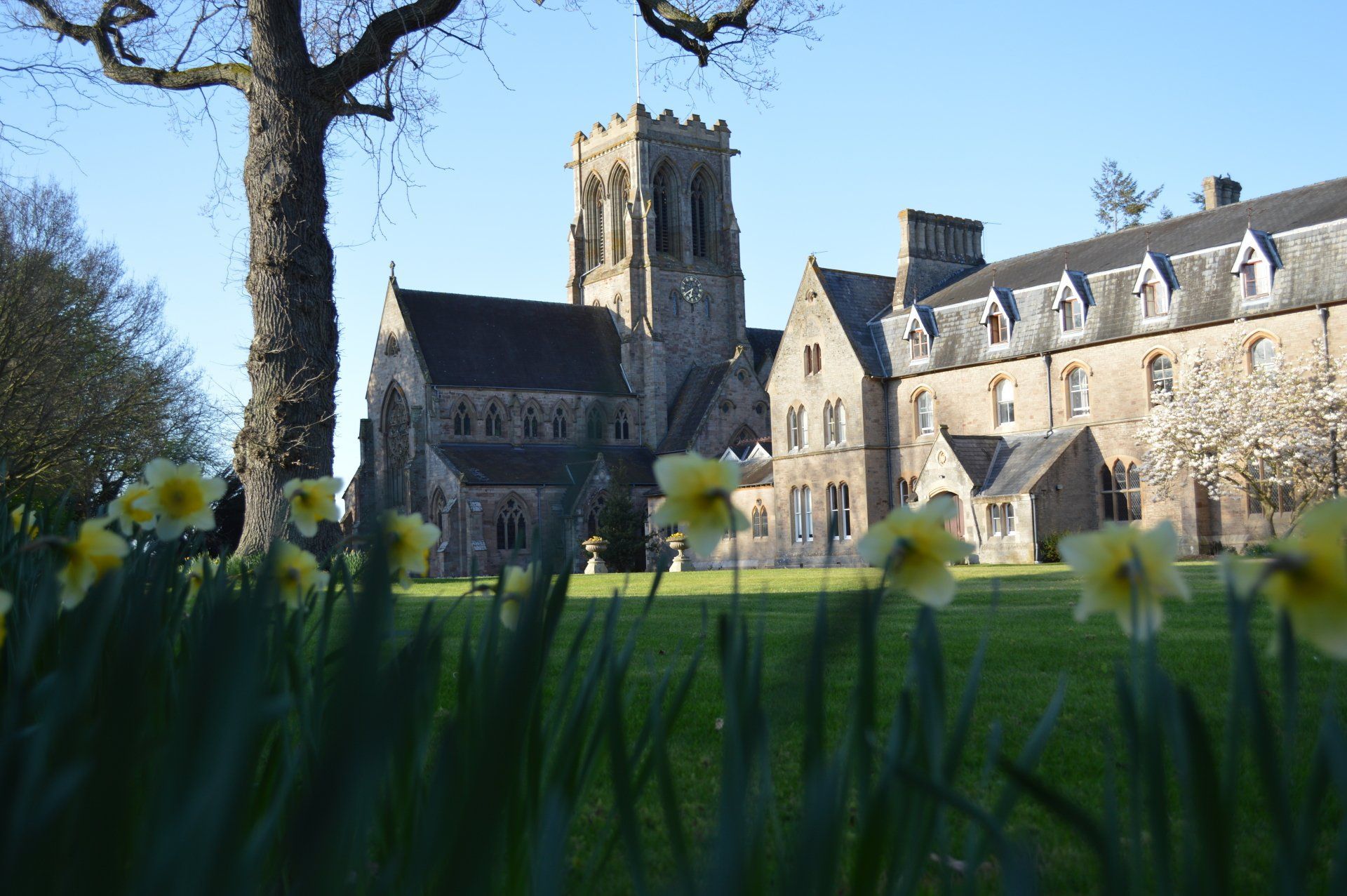
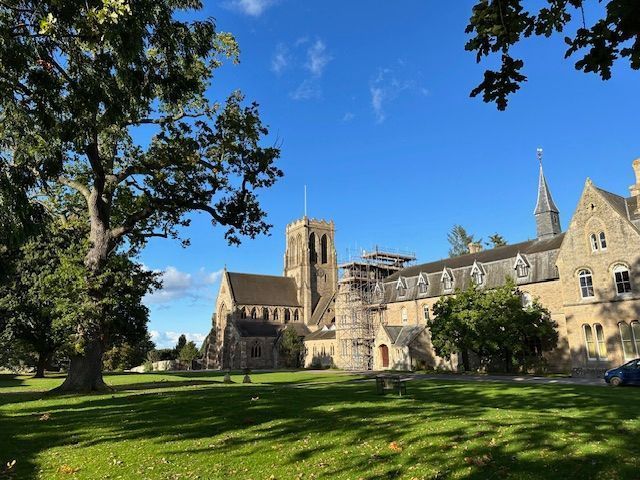
    The church at Belmont was built to the designs of Edward Welby Pugin, son of the great Augustus Welby Pugin. Built in the decorated, early English style, it demonstrated the resurgent optimism of the restored Catholic faith. The exterior is in local pink sandstone, simple and unadorned, especially the west front which is reminiscent of many classical monastic facades of the fourteenth century. The interior is faced with warm Bath stone. Light from the rich aisle windows frequently suffuse the whole space. It is a beautiful place to siton a sunny summer's afternoon


    The Church, dedicated to St Michael and all Angels, is dominated by four elegant, steeply pointed, arches which support the central tower, leading the eye heavenwards. 


    Originally this was the crossing, but now the altar stands here at the centre of the Church, well suited to the revised liturgy. On the modern stone altar is carved the figure of the Lamb of God. Symbols of the four evangelists, (Matthew the man, Mark the lion, Luke the (Hereford!) bull, and John the eagle) stand around on the corbels of the central pillars, calling to mind the heavenly


    liturgy of the Book of Revelation and the worship of the Lamb.


    Originally the high altar stood under the angel reredos at the East End, in a spacious sanctuary. This is now the Blessed Sacrament Chapel, and the place where guests often join us for our celebration of the Divine Office. 


    Below the window showing the angels Michael,

    Raphael and Gabriel and the nine choirs of angels, the reredos continues this theme with an angelic orchestra sounding of praises of God. This was decorated in 1978 with colour washes and gold leaf

  • Saints, Bishops and Relics

    Saints, Bishops, Relics

    The side altars are dedicated to the Blessed Virgin Mary, St Joseph, St Benedict, and a Memorial Altar commemorating the old boys of the school who lost their lives in the Second World War. The North Transept was formerly an elaborate chantry chapel dedicated to the Welsh Saints. In the chapel of St Benedict, a reliquary with ornate brass doors contains a relic of the True Cross which is venerated on Good Friday and the Feast of the Holy Cross.


    In the north transept, below the main window illustrating the four fathers of the Welsh

    Church, is the ornate tomb of Bishop Brown osb, the first bishop of the new diocese of

    Newport and Menevia. The other monument is that of Bishop Hedley OSB and together

    within this chapel they remind us of the close association of Belmont with the Principality of

    Wales and the Archdiocese of Cardiff.

  • The Parish Centre

    More about the Parish Centre


    What is now the Belmont Parish Centre has a long and varied history. The hall is actually one

    of the oldest buildings on the site dating back to 1853 pre-dating the Abbey church by six

    years. It was built by the Wegg Prosser family as the parish church/school of SS. Peter &

    Paul and was served by a secular priest, Fr. David Lambe until the opening of the monastery.

    The attached house was built as a convent for the Daughters of Charity who taught in the

    school until 1859. Thereafter a lay teacher ran the school and lived with his family in the

    house.

    This little parish school closed in 1917 and until 1926 the building was used as the school

    hall and classroom for the Belmont monastery Alumnate students (a school for those

    considering the priesthood). In 1926 the number of boys increased and the Alumnate became

    the newly founded lay-school which moved in to the monastery, which added a purpose-built

    extension in 1932. This was the beginning of Belmont Abbey School as most people

    remember it. The hall was then used for Parish functions, Christmas parties for the local

    children, whist drives and jumble sales. The heating arrangements were quite inadequate so

    that people constantly shivered!

    In 1930 the Guild of Our Lady of Good Counsel was formed by some of the ladies of the

    parish: Mrs Major, whose son was a pupil in the school; Mrs Cecil Wegg-Prosser; Mrs

    Rosser; Miss Colette Rosser, Miss Pritchard and many others. They met each week to make

    articles for sale at the annual fete. This fete was traditionally held in a large marquee erected

    in the paddock in the monastery wood (that area behind what is now the PCT building). The

    proceeds from the fete helped to pay for two taxis and later a bus, to take the children of the

    Parish to the Sisters of Charity School in Bullingham. The cost was £1 per day, but the fete

    raised something over £300 per annum towards this expense, a considerable sum of money in

    those days.

    During the war, Bullingham convent evacuated to Croft Castle, and the Parish School, which

    had closed in 1917, was re-opened in the hall with two mistresses and 20 or so children. The

    hall was still available for Parish events, whist drives and also a very successful Welcome

    Home Party for the Dunkirk soldiers who were brought to Bradbury Barracks. This was

    arranged by the Belmont and Clehonger War knitters, organised by Mrs Massey-Lynch. This

    group raised money to pay for the wool to knit comforts for the services. The ladies also

    organised very successful American Teas in the hall.

    The Parish School closed in 1947 and the building, which had been held on a 999 year lease,

    was sold to the Abbey by the trustees of the estate of Major John Wegg-Prosser in 1949. In

    1954 the Belmont Abbey School refurbished the hall very elegantly as the Phillips (school)

    library. Later this was dismantled and the room became, under Mr Rick Mobbs, the school art

    department. In the early 1970’s it was transformed into the school music department. Then,

    while the Abbey Church was being restored in 1978/79, the hall became, once again, the

    Parish Church, as it had been in the 1850s before the Abbey was built.

    In 1994 the Belmont Abbey School closed. A few years later, the parish under its new parish

    priest, Fr Simon, began renting the hall and the attached house (commonly known as Bleak

    House) as the Parish Centre and residence. The house since the time of the old parish school

    had been the residence of staff, senior boys and, for a short while, guest rooms for visitors to 

    the monastery. Finally, the Parish had returned to its historic roots and had its own parish

    identity and base. Today, the Parish Priest lives in ‘Bleak House’ and has the convenience of

    a parish office, meeting room, hall, and storage area and kitchen facilities all in one place. It’s

    not ideal that the hall is some way from the Church but the facilities for the parish are very

    welcome. The hall is used for parish events and is also hired out to groups and organisations

    to offset the cost of rental and maintenance. particularly worthwhile or delicious.

  • The Organ

    The Organ

    The organ at Belmont also underwent a significant programme of restoration and enlargement in 2009 by Nicholson and Co. It is one of the finest and most comprehensive instruments in Herefordshire and the Archdiocese of Cardiff. The organ has 3 manuals and a pedal board.

    There is also a separate ‘floating’ West Great organ to help support congregational singing.

    The organ has 51 speaking stops and 2998 pipes; the largest being 32 feet in length and the 

    smallest 2 inches. The action is electrical throughout and a state of the art computer system

    allows the organ to be fully programmable. It is used to accompany around 1500 Monastic and Parish liturgies a year. We, the parishioners, are privileged to worship at Mass and to share the Monastic Office with the monks.

More About the parish

Until the year 1859, the parish community relied on the chapel of St Peter & St Paul, which is now known as the Parish Centre, as its place for worship and to hold Mass. 

This chapel served as a spiritual hub for the congregation during those formative years, fostering a sense of community and shared faith among the parishioners.

Today, respecting the wishes of Belmont’s great benefactor, Mr Francis Richard Wegg-Prosser, the parish shares the church with the monastic community.

We warmly invite all visitors and encourage your active participation in parish life, fostering the gift of faith by helping others.